
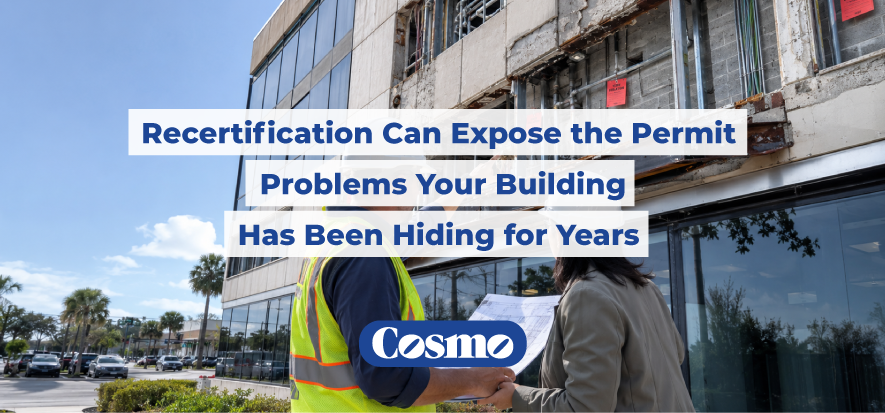
Recertification Can Expose the Permit Problems Your Building Has Been Hiding for Years
Building recertification is supposed to confirm that a property is safe for continued occupancy, but for many condo associations, multifamily owners, and property managers in Miami Dade, it does something else first. It exposes old permit problems, missing inspections, unpermitted repairs, unsafe structure concerns, and violations that were never fully resolved.
That is why miami dade recertification permit violations has become a critical topic for older buildings across South Florida. The issue is not only whether a building can pass structural and electrical review. The bigger operational risk is what the recertification process uncovers along the way.
A building may look functional, occupied, and stable from the outside while still carrying years of incomplete records behind the scenes. Once recertification begins, those records matter. Engineers review conditions, building departments review compliance, and missing permits can suddenly become urgent.
What Building Recertification Means in Miami Dade
Miami Dade’s building recertification program applies to qualifying buildings as they reach their required inspection cycle. According to the official Miami Dade Recertification page, property owners must submit written recertification reports prepared by a Florida registered architect or engineer, certifying that the building is structurally and electrically safe for continued occupancy.
The county’s Building Recertification Portal explains that qualifying inland buildings generally become subject to recertification at 30 years, while certain coastal buildings may be subject at 25 years, with additional inspections every 10 years after that.
This process is especially important for condominiums and multifamily properties because one report can affect dozens or hundreds of owners. If the report identifies required repairs, the association or owner may need permits, contractors, inspections, funding, and a realistic compliance schedule.
Why Recertification Can Trigger Permit Problems
Recertification is not just a visual walk through. Updated guidelines require design professionals to research building history, inspect major components, review unsafe structure cases, and identify unpermitted activities that may affect the building’s safety.
That means old work can resurface. A balcony repair, electrical room modification, roof repair, concrete restoration project, railing replacement, drainage improvement, or mechanical change may have been completed years ago without proper permit closure.
When the engineer identifies that work, or when the building department reviews the file, the issue can move from forgotten history to active compliance problem.
This is where many associations get blindsided. They budget for an engineering report, but they do not budget for permit clean up, violation resolution, inspection coordination, or construction corrections.
Repairs Found During Recertification Usually Require Permits
If the recertification report identifies required repairs, the building cannot simply patch the issue informally and move on. Miami Dade states that when repairs are needed, proper permitting procedures must be followed before the building can be recertified.
This creates a second timeline. The building must not only submit the recertification report, it may also need to open permits, complete repairs, pass inspections, and close the work correctly.
That is why Miami Dade Building Permit Renewal and Extensions: How to Keep Your Project Alive Before It Expires is highly relevant for associations managing long repair schedules. A repair permit that expires during recertification can create a new compliance issue on top of the original one.
For buildings facing overloaded municipal review timelines, Permit Bottleneck in Miami Dade? Private Providers May Be Your Fastest Legal Exit may also help explain when legally authorized private provider support can reduce delays.
Missing Inspections Can Stop the Process
One of the most common problems discovered during recertification is not the absence of a permit, but the absence of required inspections.
A permit may have been opened years ago for concrete repair, electrical work, roofing, or plumbing upgrades, but if the final inspections were never passed, the record may still show incomplete work. The building may have continued operating normally, but the official file remains unresolved.
This is exactly the kind of issue covered in Your Old Miami Dade Permit Is Missing Inspections? Here Are the Real Ways to Get Unstuck.
During recertification, missing inspections are not harmless details. They can delay acceptance of the report, complicate repair permits, and create questions about whether previous work was properly verified.
Electrical and Plumbing Issues Can Become Bigger Than Expected
Electrical and plumbing work often becomes visible during recertification because older buildings frequently have years of repairs, replacements, and emergency fixes. Some were properly permitted. Some were not. Some were permitted but never finalized.
Electrical rooms, panels, service equipment, pumps, water heaters, drainage systems, and common area plumbing can all become part of the compliance review. If the work affects safety or building systems, it cannot be treated casually.
For owners unsure what types of work normally require permits, Electrical and Plumbing Permits in Miami Dade: What Really Requires One? provides useful context.
The practical point is simple. A recertification report can turn an old technical shortcut into a formal permit problem.
Violations Can Follow If the Building Misses Deadlines
Miami Dade gives property owners a defined timeframe to submit required recertification reports after notice. If the owner fails to obtain recertification within the required timeframe, the county may issue a citation, refer the case to enforcement, and pursue penalties.
The county’s recertification guidance states that failure to timely correct the violation and pay the initial penalty can lead to accumulated penalties up to $10,000 per violation. If compliance is still not met, the case may be referred for lien collection.
Recertification Creates Financial Pressure for Condos and Multifamily Buildings
For condo associations, the technical problem quickly becomes a financial problem.
If the report requires repairs, the board may need to approve engineering work, obtain bids, open permits, schedule inspections, manage residents, and fund the project. Depending on the building condition, this may involve special assessments, reserve decisions, lender questions, insurance pressure, and owner disputes.
The Florida DBPR condominium resources are also useful for owners trying to understand statewide milestone inspection obligations and condominium safety requirements.
From a management perspective, the mistake is treating recertification as a single report instead of a multi stage compliance project. A report is only the beginning if it identifies repairs or unresolved records.
Why Inspections Become the Operational Bottleneck
Even after permits are issued, inspections become the point where progress is either confirmed or blocked.
Repairs must be accessible, documented, and completed according to approved plans. If inspections fail, the building may need corrections, reinspection scheduling, additional documentation, or revised plans.
This is why Inside the Miami Dade Permit Inspections Process: What Really Happens After You Apply is worth linking in any recertification strategy. Passing inspections is not an administrative formality. It is the step that proves the repair work can move toward closure.
How Cosmo Helps Turn Chaos Into a Compliance Plan
The smartest approach is to treat recertification as a risk management process, not just an engineering deadline.
Cosmo Management Group can help property owners, associations, and managers identify the permit and violation problems that may complicate recertification before they become emergencies. That includes reviewing permit history, checking violation records, coordinating missing inspections, supporting repair permit strategy, and helping teams understand what must be cleared first.
A strong process usually starts with records review, then moves into engineer coordination, permit issue identification, repair planning, inspection tracking, and final compliance confirmation.
This is not glamorous work. It is the kind of work that prevents expensive surprises, which in Miami Dade property management is basically a superpower.
Conclusion
Building recertification in Miami Dade is not just a safety checkpoint. It can expose old permit problems, missing inspections, unpermitted work, unsafe structure concerns, and code violations that have been sitting quietly in the background for years.
For condo associations and multifamily owners, the risk is both technical and financial. A single unresolved permit issue can delay recertification, trigger violations, increase costs, and create pressure across the entire building community.
If your building is approaching recertification, do not wait for the engineer’s report to reveal every problem under deadline pressure. Cosmo Management Group helps owners and managers review records early, organize compliance priorities, coordinate permit and inspection issues, and move toward recertification with a clearer plan.
Contact Cosmo Management Group today and get ahead of the permit and violation problems before recertification turns them into urgent liabilities.
FAQs About Miami Dade Recertification Permit Violations
What is Miami Dade building recertification?
Miami Dade building recertification is a required safety review for qualifying buildings. The process requires structural and electrical reports prepared by a Florida registered architect or engineer to confirm that the building is safe for continued occupancy.
Can building recertification trigger permit violations?
Yes. Recertification can expose unpermitted work, missing inspections, expired permits, unsafe structure concerns, and repairs that require new permits before the building can complete the process.
What happens if a building fails to complete recertification in Miami Dade?
If the owner does not complete recertification within the required timeframe, the case may lead to citations, penalties, unsafe structure enforcement, and possible lien collection.
Do repairs found during recertification need permits?
Yes. When recertification identifies required repairs, proper permitting procedures must generally be followed before the building can be recertified.
Why do missing inspections matter during recertification?
Missing inspections indicate that prior permitted work may not have been officially verified or closed. This can delay recertification and create additional compliance requirements.
Who is responsible for recertification in a condo building?
The property owner or condominium association is generally responsible for completing recertification requirements, hiring qualified professionals, submitting reports, and addressing required repairs.
How can property managers prepare for recertification?
Property managers should review permit history, search violation records, organize old repair documentation, coordinate with engineers, and identify possible inspection or permit issues before the formal deadline arrives.


0 comments